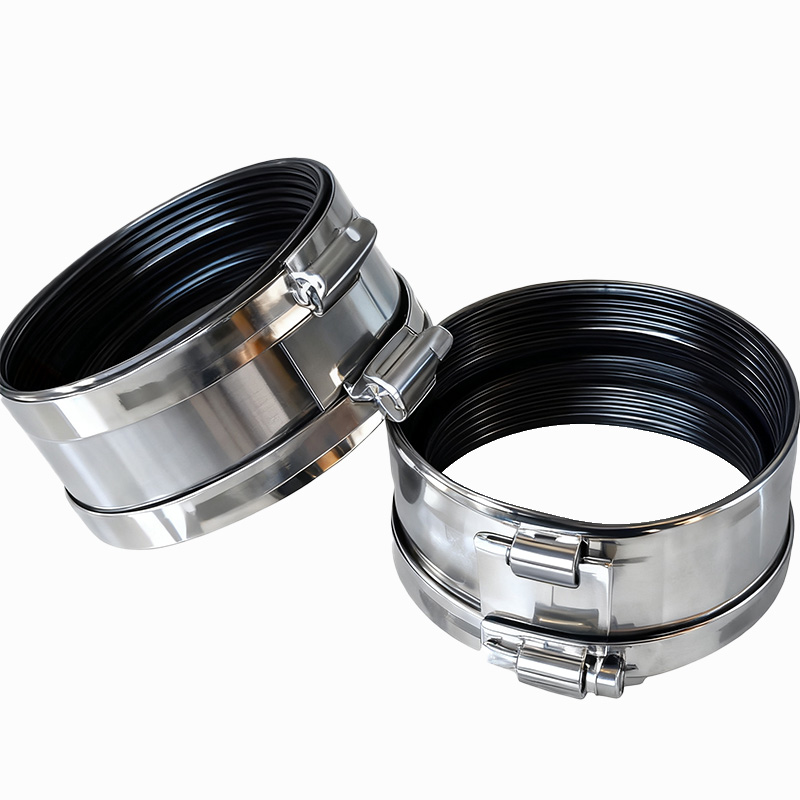

Product Introduction
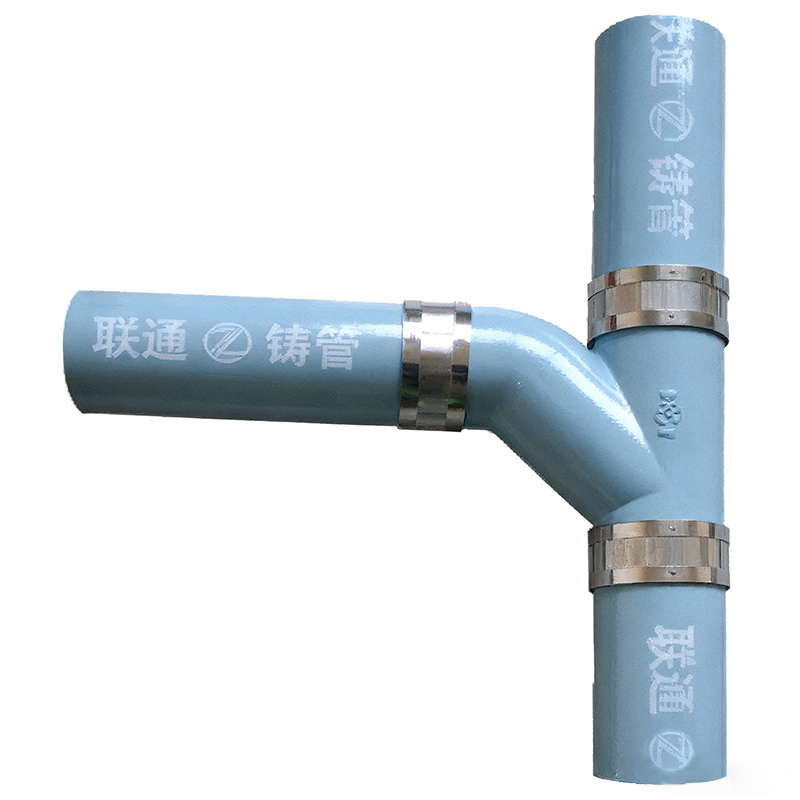
The Type W Flexible Joint Cast Iron Drainage Pipe and Fitting series is manufactured in compliance with the Chinese National Standard GB/T 12772-2016. This system utilizes socketless pipes and fittings, which are connected using stainless steel couplings. It offers excellent sealing, superior seismic performance, rapid installation, easy maintenance, reliable performance, an aesthetically pleasing and durable finish, and space-saving efficiency.
Installation Method for Type W Flexible Joint Cast Iron Drainage Pipe and Fittings
1. Pipe Cutting
Cut the straight pipe to the required length. After cutting, ensure the cross-section is perpendicular to the pipe axis, with a smooth and even surface free of burrs or sharp edges to prevent damage to the rubber sealing ring.
Cut the straight pipe to the required length. After cutting, ensure the cross-section is perpendicular to the pipe axis, with a smooth and even surface free of burrs or sharp edges to prevent damage to the rubber sealing ring.
2.Component Assembly
Loosen the coupling bolts using a dedicated wrench and remove the rubber sealing ring. First, slide the stainless steel coupling onto the positioned pipe or fitting. Then, fit one end of the rubber sealing ring onto the same positioned pipe or fitting. Advance it until the pipe/fitting end face makes full contact with the central stop ring inside the sealing ring. Completely fold back the other end of the rubber sealing ring to fully expose the internal central stop ring.
Loosen the coupling bolts using a dedicated wrench and remove the rubber sealing ring. First, slide the stainless steel coupling onto the positioned pipe or fitting. Then, fit one end of the rubber sealing ring onto the same positioned pipe or fitting. Advance it until the pipe/fitting end face makes full contact with the central stop ring inside the sealing ring. Completely fold back the other end of the rubber sealing ring to fully expose the internal central stop ring.
3. Joint Connection
Place the end face of the pipe or fitting to be connected vertically against the exposed central stop ring of the folded-back sealing ring. Return the folded-back section of the sealing ring to its original position, ensuring both connected pipe/fitting ends are snug against the central stop ring. Align the two connected components on the same axis.
Place the end face of the pipe or fitting to be connected vertically against the exposed central stop ring of the folded-back sealing ring. Return the folded-back section of the sealing ring to its original position, ensuring both connected pipe/fitting ends are snug against the central stop ring. Align the two connected components on the same axis.
4.Coupling Positioning
Move the pre-installed coupling over to the folded flange area of the rubber sealing ring, aligning it with the end face of the ring.
Move the pre-installed coupling over to the folded flange area of the rubber sealing ring, aligning it with the end face of the ring.
5. Bolt Tightening
Using the dedicated wrench, progressively and alternately tighten the coupling bolts. Do not fully tighten bolts on one side in a single pass, as this may distort the coupling. Avoid over-tightening, which could damage the bolts or the steel band buckle.
Using the dedicated wrench, progressively and alternately tighten the coupling bolts. Do not fully tighten bolts on one side in a single pass, as this may distort the coupling. Avoid over-tightening, which could damage the bolts or the steel band buckle.
